Sandy English
World Socialist Web Site
14 February 2018
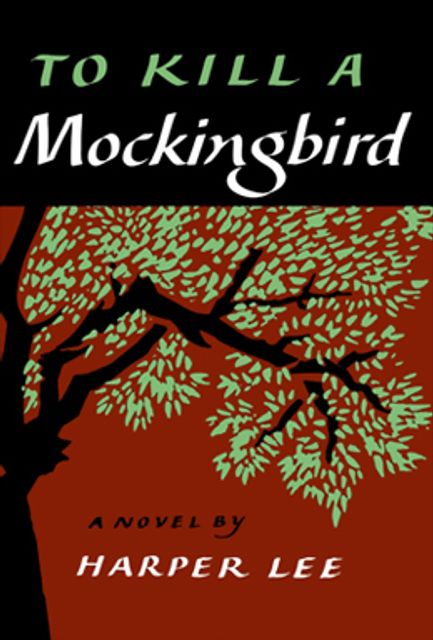
In a reactionary decision made earlier this week, the Duluth, Minnesota, school board decided to remove Harper Lee’s novel To Kill a Mockingbird (1960), set in the Jim Crow south, and Mark Twain’s The Adventures of Huckleberry Finn (1885), about the friendship between a white boy and an escaped slave in the antebellum South, from its schools’ curricula. The reason given was the frequent use of racial slurs.
Michael Cary, director of curriculum and instruction for the district, told the media, “Conversations about race are an important topic, and we want to make sure we address those conversations in a way that works well for all of our students.”
The decision was made by a group of “district leaders and leaders in Duluth’s secondary schools,” after complaints by parents and students. Apparently, teachers were not consulted and only heard the news last week.
The books will remain in the Duluth Public School libraries.
The decision was called “long overdue” by Duluth NAACP Vice President Claudie Washington. In a remarkably blinkered and arrogant statement, he claimed that “Teachers don’t know how to teach that. You know, that’s my belief and it’s not necessary that they even try. They can’t identify with that period.”
Contrary to Mr. Washington’s assertion, these challenging works are eminently teachable, which is why they have been included in the curricula of thousands of schools for decades in the United States, and still are. The two books in particular lend themselves to revealing the reality of the present through the outlook of the authors and their concrete, “living” depiction of characters in the past. This is what literature does, as opposed to historical works or political documents.
The use of racial epithets was part of the time and place in which the books were written, and every reader will grasp the authors’ hostility to bigotry and brutality.
Harper Lee’s attitude toward racism is made clear in every aspect of the novel, from her depiction of the injustice of the legal system to the portrait of African-American characters, and, not least, the democratic sensibilities of lawyer Atticus Finch and his daughter Scout, the novel’s protagonist.
The writing of To Kill a Mockingbird was a major historical and artistic achievement, made possible in part by the mass struggles of the Civil Rights movement. In writing the novel, Lee, a native Alabaman born in 1926, was powerfully influenced by both the case of the Scottsboro Boys in 1931 and, more immediately, the 1934 trial in Monroeville, Alabama (her hometown) of Walter Lett, a black former convict, accused of sexual assault by a poor white woman. Lett was initially sentenced to death, but his sentence was reduced to life and he died in prison.
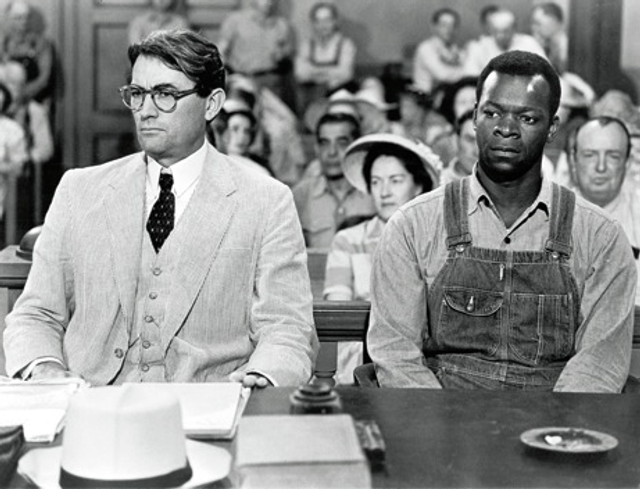
The novel was made into a memorable popular film released in 1962, directed by Robert Mulligan from a script by Horton Foote, with a score by Elmer Bernstein. The movie starred Gregory Peck, Brock Peters and Robert Duvall and won three Academy Awards.
For Shannon Gibney, an African-American author and instructor at Minneapolis Community and Technical College, according to the Minneapolis Star Tribune, to dismiss Lee’s novel and all the history and trauma it brings with it as a mere “white savior narrative” is simply backward and ignorant.
For its part, Twain’s Huckleberry Finn, set before the Civil War, remains one of the most humane and humanizing novels of all time, despite—or because of—the cruel conditions that prevailed in the South during the rule of the planter aristocracy. Among its other extraordinary elements, the novel dramatizes, in a brief and astounding scene, the passage in the consciousness of a white boy from considering a black man as chattel property to his full realization that he is a human being and his dearest friend.
Twain, writing elsewhere of that period in the South, observed, “In those old slave-holding days the whole community was agreed as to one thing—the awful sacredness of slave property. To help steal a horse or a cow was a low crime, but to help a hunted slave, or feed him or shelter him, or hide him, or comfort him, in his troubles, his terrors, his despair, or hesitate to promptly betray him to the slave-catcher when opportunity offered was a much baser crime, & carried with it a stain, a moral smirch which nothing could wipe away.”
In an oft-cited comment, novelist Ernest Hemingway once asserted that “All modern American literature comes from one book by Mark Twain called Huckleberry Finn.” The poet T. S. Eliot suggested that there was “no more solitary character in fiction” than Huckleberry Finn, who he described as “not unworthy to take a place with Ulysses, Faust, Don Quixote, Don Juan, Hamlet and other great discoveries that man has made about himself.”
Responding to the deplorable Duluth decision and its justification, the National Coalition Against Censorship, an umbrella organization for 50 anti-censorship groups, argued: “The problems of living in a society where racial tensions persist will not be resolved by banishing literary classics from the classroom. On the contrary, the classroom is where the history, use and destructiveness of this language should be examined and discussed.”
The exclusion of the novels takes place at a particular historical moment. Both books have been repeatedly banned, most often in recent years by those posing as protectors of children from racism, such as the case in Biloxi, Mississippi, last year. However, the atmosphere created by the #MeToo witch-hunt and the media obsession with gender and racial politics have undoubtedly emboldened those who would like to censor the books.
The fact that works of art can teach children about the world and help provide them insight into social behavior they encounter every day is clearly of little importance to the members of the Duluth school board and the Duluth NAACP when weighed against the advancement of their careers and conformity to the politics of racial identity.
Source: http://www.wsws.org/en/articles/2018/02/14/tkam-f14.html
World Socialist Web Site
14 February 2018
In a reactionary decision made earlier this week, the Duluth, Minnesota, school board decided to remove Harper Lee’s novel To Kill a Mockingbird (1960), set in the Jim Crow south, and Mark Twain’s The Adventures of Huckleberry Finn (1885), about the friendship between a white boy and an escaped slave in the antebellum South, from its schools’ curricula. The reason given was the frequent use of racial slurs.
Michael Cary, director of curriculum and instruction for the district, told the media, “Conversations about race are an important topic, and we want to make sure we address those conversations in a way that works well for all of our students.”
The decision was made by a group of “district leaders and leaders in Duluth’s secondary schools,” after complaints by parents and students. Apparently, teachers were not consulted and only heard the news last week.
The books will remain in the Duluth Public School libraries.
The decision was called “long overdue” by Duluth NAACP Vice President Claudie Washington. In a remarkably blinkered and arrogant statement, he claimed that “Teachers don’t know how to teach that. You know, that’s my belief and it’s not necessary that they even try. They can’t identify with that period.”
Contrary to Mr. Washington’s assertion, these challenging works are eminently teachable, which is why they have been included in the curricula of thousands of schools for decades in the United States, and still are. The two books in particular lend themselves to revealing the reality of the present through the outlook of the authors and their concrete, “living” depiction of characters in the past. This is what literature does, as opposed to historical works or political documents.
The use of racial epithets was part of the time and place in which the books were written, and every reader will grasp the authors’ hostility to bigotry and brutality.
Harper Lee’s attitude toward racism is made clear in every aspect of the novel, from her depiction of the injustice of the legal system to the portrait of African-American characters, and, not least, the democratic sensibilities of lawyer Atticus Finch and his daughter Scout, the novel’s protagonist.
The writing of To Kill a Mockingbird was a major historical and artistic achievement, made possible in part by the mass struggles of the Civil Rights movement. In writing the novel, Lee, a native Alabaman born in 1926, was powerfully influenced by both the case of the Scottsboro Boys in 1931 and, more immediately, the 1934 trial in Monroeville, Alabama (her hometown) of Walter Lett, a black former convict, accused of sexual assault by a poor white woman. Lett was initially sentenced to death, but his sentence was reduced to life and he died in prison.
The novel was made into a memorable popular film released in 1962, directed by Robert Mulligan from a script by Horton Foote, with a score by Elmer Bernstein. The movie starred Gregory Peck, Brock Peters and Robert Duvall and won three Academy Awards.
For Shannon Gibney, an African-American author and instructor at Minneapolis Community and Technical College, according to the Minneapolis Star Tribune, to dismiss Lee’s novel and all the history and trauma it brings with it as a mere “white savior narrative” is simply backward and ignorant.
For its part, Twain’s Huckleberry Finn, set before the Civil War, remains one of the most humane and humanizing novels of all time, despite—or because of—the cruel conditions that prevailed in the South during the rule of the planter aristocracy. Among its other extraordinary elements, the novel dramatizes, in a brief and astounding scene, the passage in the consciousness of a white boy from considering a black man as chattel property to his full realization that he is a human being and his dearest friend.
Twain, writing elsewhere of that period in the South, observed, “In those old slave-holding days the whole community was agreed as to one thing—the awful sacredness of slave property. To help steal a horse or a cow was a low crime, but to help a hunted slave, or feed him or shelter him, or hide him, or comfort him, in his troubles, his terrors, his despair, or hesitate to promptly betray him to the slave-catcher when opportunity offered was a much baser crime, & carried with it a stain, a moral smirch which nothing could wipe away.”
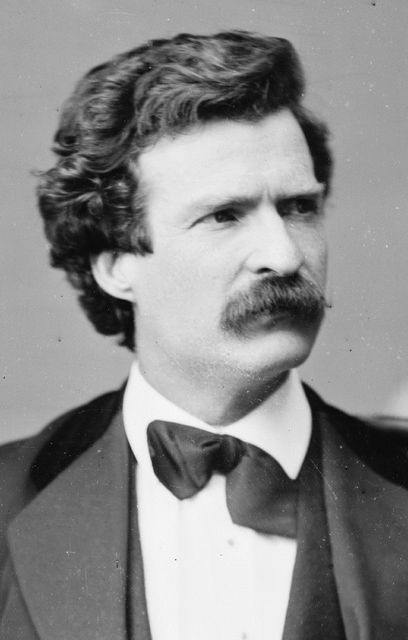
In an oft-cited comment, novelist Ernest Hemingway once asserted that “All modern American literature comes from one book by Mark Twain called Huckleberry Finn.” The poet T. S. Eliot suggested that there was “no more solitary character in fiction” than Huckleberry Finn, who he described as “not unworthy to take a place with Ulysses, Faust, Don Quixote, Don Juan, Hamlet and other great discoveries that man has made about himself.”
Responding to the deplorable Duluth decision and its justification, the National Coalition Against Censorship, an umbrella organization for 50 anti-censorship groups, argued: “The problems of living in a society where racial tensions persist will not be resolved by banishing literary classics from the classroom. On the contrary, the classroom is where the history, use and destructiveness of this language should be examined and discussed.”
The exclusion of the novels takes place at a particular historical moment. Both books have been repeatedly banned, most often in recent years by those posing as protectors of children from racism, such as the case in Biloxi, Mississippi, last year. However, the atmosphere created by the #MeToo witch-hunt and the media obsession with gender and racial politics have undoubtedly emboldened those who would like to censor the books.
The fact that works of art can teach children about the world and help provide them insight into social behavior they encounter every day is clearly of little importance to the members of the Duluth school board and the Duluth NAACP when weighed against the advancement of their careers and conformity to the politics of racial identity.
Source: http://www.wsws.org/en/articles/2018/02/14/tkam-f14.html
Comments
Post a Comment